
Description
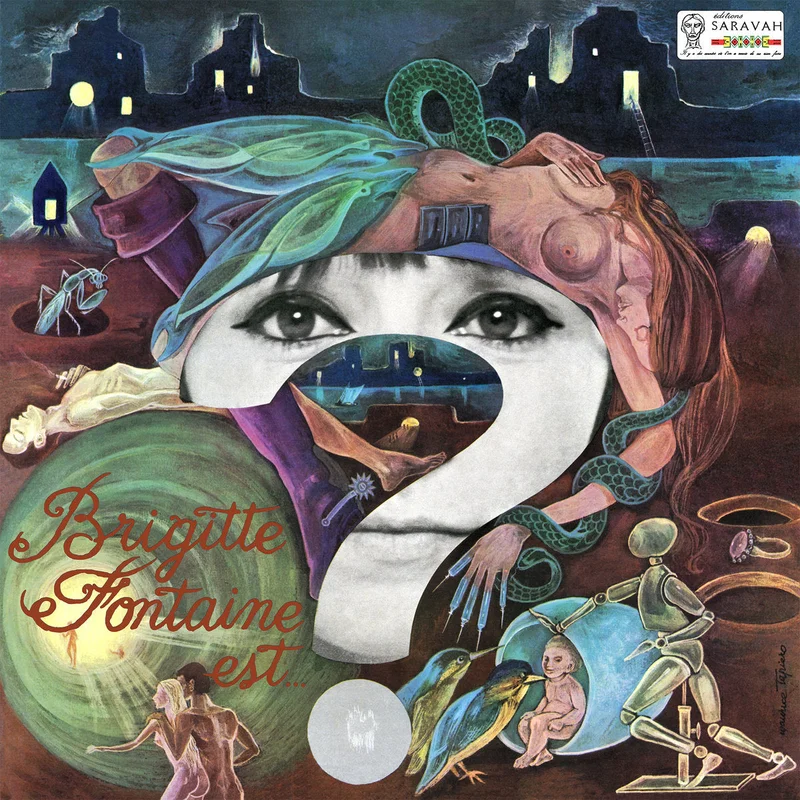
WeWantSounds is delighted to reissue French pop icon Brigitte Fontaines landmark 1968 album Brigitte Fontaine Est Folle, originally released on the cult label Saravah and arranged by Jean-Claude Vannier. Approved by the artist, this reissue features the original album, newly remastered from the original tapes, along with demos, instrumentals, and a live rendition of Il Pleut recorded for France Inter/ORTF. Brigitte Fontaine’s landmark 1968 LP, arranged by Jean-Claude Vannier redefined French pop three years before Gainsbourgs histoire De Melody Nelson.
The album is reissued here in a deluxe edition featuring the original album plus a wealth of bonus material – the 2-Lp edition features a 20-page booklet with rare photos and contributions by Stereolabs Laetitia Sadier, Jeremy Allen, Benot Mouchart and Benjamin Barouh.
Brigitte Fontaine is not crazy, she talks about the complex, unhinged world we still live in Ltitia Sadier. (via Label)
“Three years ago, I found myself conducting a phone interview with Beck Hansen about 1960s French music, his disinterest audible over the line. But at the mention of the curious French chanteuse (as well as novelist, actress, playwright, and poet) Brigitte Fontaine and her decades-long musical collaboration with Kabyle musician Areski Belkacem, he noticeably brightened. That Hansen was a fan of the singular musical vision enacted by Fontaine and Belkacem was obvious, and in terms of 90s alt-rock icons, he was not alone: Fontaines oeuvre was a touchstone for the likes of Sonic Youth (Fontaines vocal affect and influence can clearly be heard in Kim Gordons songs), Bjrk, Jarvis Cocker, and Stereolab, to name but a few.
And yet only with these recent reissues of Fontaines groundbreaking third and fourth albums1968s EstFolle and 1971s Comme La Radiois her music domestically available in the US. By the time Fontaine made her recorded debut in 1965, she was already a published playwright and actress, appearing on numerous Parisian stages. Nearly 30 years of age by the time of the release of her breakout third album, Fontaine was a world away from French pop musics stables of Y-Y girls, hewing slightly closer to the brooding chanson of Jacques Brel. Drawing on her experimental theatrical background, she began penning songs that abandoned standard pop rhyme schemes, using her artful pacing and a form of spoken word delivery that put her earthy, Marlene Dietrich intonation to the most effective use.
Within an album or two, Fontaine would be deep in avant-garde jazz and nascent world music hybrids, so in hindsight EstFolle sounds the most traditional, even though its nothing of the sortin fact, the title translates to Brigitte Fontaine is crazy and its cover features Fontaines striking dark eyes emanating from a big white question mark. Recorded in the studio with composer/arranger Jean-Claude Vannierwho would soon add orchestral heft to Frances greatest rock export, Serge Gainsbourgs Histoire de Melody NelsonEstFolle is playful and charming, even if it offers few hints at the curveballs ahead.
But as she began to work closer with proto-freak-folk/songwriter Jacques Higelin (he wrote one of EstFolles songs) and her soon-to-be lifelong collaborator Areski Belkacem, her music mutated into something stranger and more wondrous. Comme la Radio stems from the musical/theatrical works the three undertook at the end of the 1960s, where Fontaines husky spoken verses went atop spare and propulsive rhythms that drew on folk and Arabic and African instrumentation. The albums coup comes in the form of Brigitte Fontaine and Areski bringing in the fiercely defiant jazz group the Art Ensemble of Chicago, who had decamped to Paris for a few years.
From the opening notes of that muscular walking bassline provided by Malachi Favors, the title track is a startling hybrid of avant-garde sensibilitiesboth of the free jazz and French rock varietythat entrances rather than excludes. The Art Ensemble could abstract and abandon structures with the best of American jazz ensembles of the late 60s, but here they play in the pocket to mesmerizing effect, from the lyrical horn lines provided by the frontline of Joseph Jarman, Roscoe Mitchell, and Leo Smith to the throbbing undertow provided by Favors and Belkacem, the rhythms foregrounded, the brass weaving in and around Fontaines seductive spoken lines for eight snake-charming minutes.
The numbers featuring the Art Ensembles contributions remain some of free jazzs most evocative crossovers, but what makes Comme a la Radio one of the eras most striking documents is that even without the jazz musician guests, its a haunting acid-folk album underneath the brass. The albums most stunning moments come when Areski handles all of the music around Fontaines vocals. Theres the ghostly shenai and bouzouki adding an exotic cast to the fragile incant of L’t L’t, or the strange strings on the harrowing album closer, Lettre A Monsieur Le Chef De Gare De La Tour De Carol, the sawed strings and buzzing dronesurged faster and faster by the hand drums and wordless vocals of Areskibuild to a hypnotic and feverish climax. Both Lettre and the bonus track Le Noir C’Est Mieux Choisi remain some of the most beatific dark folk songs ever recorded, regardless of language.” (via Pitchfork)
2 LP Special Edition
Official deluxe reissue of Brigitte Fontaine’s landmark 1968 album, arranged by Jean-Claude Vannier and released on the French label Saravah.
3 years before Histoire de Melody Nelson Brigitte Fontaine and Jean-Claude Vannier reinvented French Pop.
Includes:
The original album newly remastered from the original tapes
1967 demo recordings by Brigitte Fontaine and Olivier Bloch-Lain
Instrumental versions of 7 album tracks showcasing Jean Claude Vannier’s groundbreaking arrangements
An alternate acoustic version of “Il Pleut” recorded live for the France Inter (ORTF) Radio
20-page bilingual booklet (English/French)
Includes:
Rare photos
Introduction by Jeremy Allen
Reflection by Latitia Sadier
Essays by Benot Mouchart and Benjamin Barouh
Personal testimonies by Brigitte Fontaine, Jean-Claude Vannier, Olivier Bloch-Lain, Pierre Barouh, Jacques Higelin
Complete lyrics to every track on the album
Label: WeWantSounds
Format: 2 x Vinyl, LP, Album, Repress
Reissued: 2025 / Original release: 1968
Genre: Jazz, Pop
Style: Chanson, Female Vocals
File under: Female Vocals (Jazz)
Reviews
There are no reviews yet.