





Description
The Analog Vault // Essential Listening
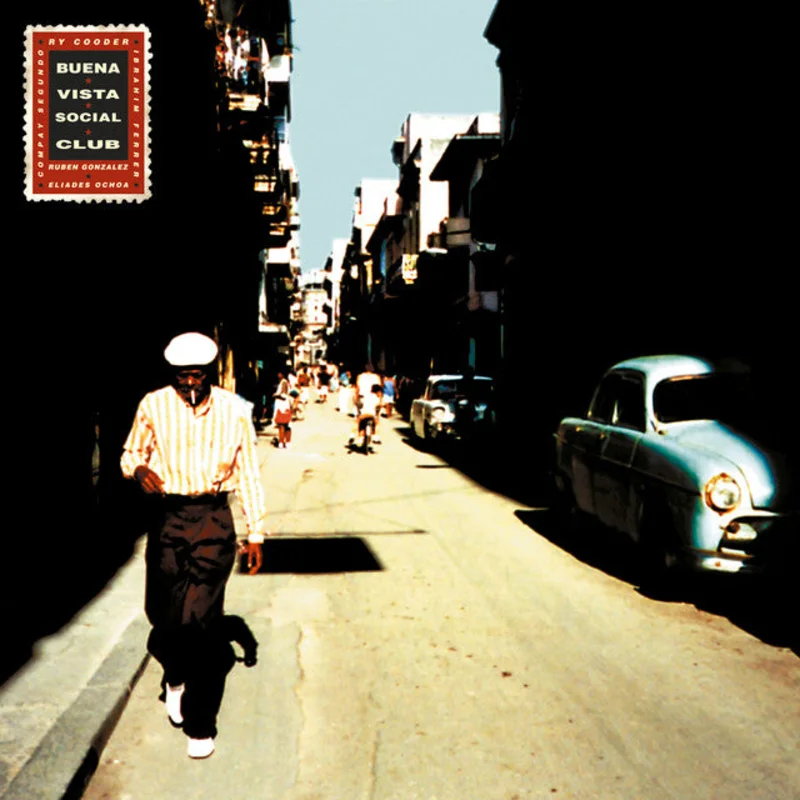
No other record has done more to popularise the energy and romance of Cuban music than Buena Vista Social Clubs enduring 1997 debut. Named after the homonymous Havana hotspot, this exalted ensemble was put together by bandleader Juan de Marcos Gonzlez and American guitarist Ry Cooder. Consisting of aged and retired Cuban musicians (some in their 70s and late 80s such as Ibrahim Ferrer and Rubn Gonzlez) with a cadre of younger players, the group recorded the definitive document of their homelands exuberant sound in six magical days.
This self-titled album exposed a bouquet of traditional styles to the wider world – by weaving in older genres such as son cubano, bolero, descarga, danzn and guajira – alongside jazz and mambo The result an enduring classic that fully captures the energy, passion and vitality that defines Cuban music culture. The Analog Vault
The Cuban musical collective known as Buena Vista Social Club became a surprise international hit in the late 1990s with its eponymous debut album and documentary film. Conceived by British producer Nick Gold and American guitarist Ry Cooder, the project effectively relaunched the careers of Cuban legends like Ibrahim Ferrer and Rubn Gonzlez, introducing them and several other renowned local players to a widespread global audience. The album’s success led to a revival not only of Cuban music, but of Latin music as a whole which carried into the 21st century. A later touring group called Orquesta Buena Vista Social Club continued to represent the project’s music and spirit over subsequent decades.
Buena Vista Social Club’s origins lie with producer Nick Gold of Britain’s World Circuit label who invited guitarist Ry Cooder to Havana in 1996 to participate in sessions that were to pair Cuban musicians with African players from Mali. When the Malians failed to to obtain the necessary visas, Gold and Cooder quickly changed tack and sought out a number of legendary local musicians whose performing careers had largely ended decades earlier with the rise of Fidel Castro.
Recruiting the long-forgotten likes of singer Ibrahim Ferrer, guitarists/singers Compay Segundo and Eliades Ochoa, and pianist Rubn Gonzlez, Gold and Cooder entered Havana’s Egrem Studios to record an album of Cuban son music that was eventually released as Buena Vista Social Club; the project was an unexpected commercial and critical smash, earning a Grammy Award and becoming the best-selling release of Cooder’s long career. In 1998 he returned to Havana with his son, percussionist Joachim, to record a solo LP with Ferrer; the sessions were captured on film by director Wim Wenders, who also documented sell-out Buena Vista Social Club live performances in Amsterdam and New York City. (Wenders’ film, also titled Buena Vista Social Club, earned an Academy Award nomination in 2000.) The public’s continued interest in Cuban music subsequently generated solo efforts from Segundo and Gonzlez, as well as a series of international live performances promoted under the Buena Vista Social Club aegis. (via AllMusic)
Buena Vista Social Club was a phenomenon. A one off, feel good sensation. And one that led to a web of subsequent spin-offs, that benefited from the original success, but took it in surprising new directions.
On the albums release, Nick Gold hoped that, given a fair wind, Buena Vista might sell 100,000 copies a highly respectable figure in the world music field. Today the albums sales stand at over eight million, making it the biggest-selling Cuban album in history. As one critic put it, Buena Vista has become world musics equivalent of The Dark Side of the Moon. This is the best thing I was ever involved in, Ry Cooder said prior to the albums release in 1997. It’s the peak, a music that takes care of you and nurtures you. I felt that I had trained all my life for this experience and it was a blessed thing. via World Circuit
Label: World Circuit Ltd, BMG
Format: 2 x Vinyl, LP, Album, Reissue, Stereo, Gatefold, 180g
Reissued: 2021 / Original Release: 1997
Genre: Latin
Style: Afro-Cuban, Son, Danzon, Bolero, Trova, Guajira, Ballad
File under: Latin
Reviews
There are no reviews yet.