


Description
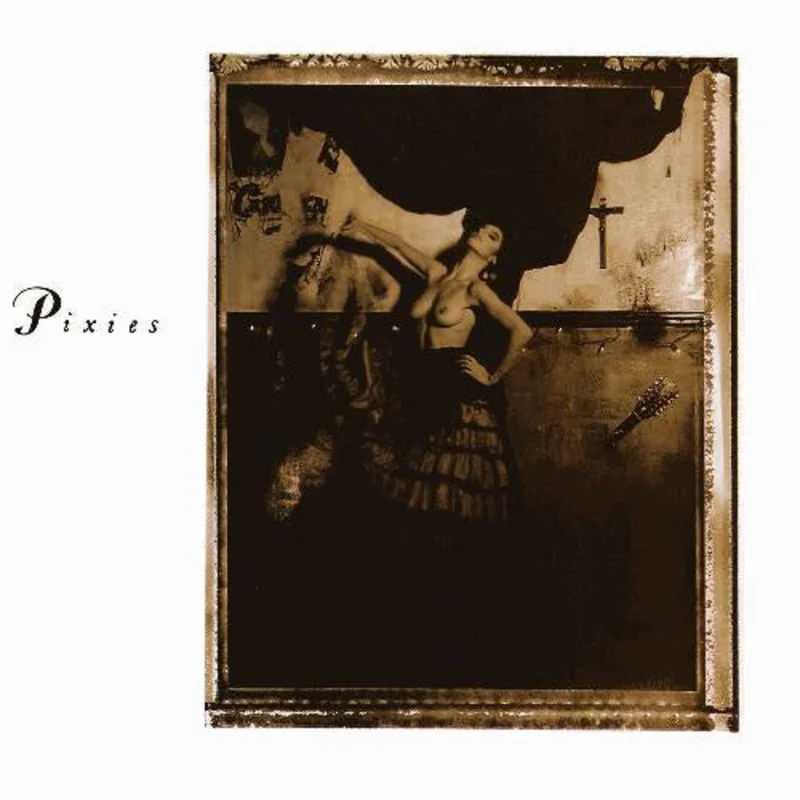
Though the specialist subjects of sun, surf and dubious sexual encounters of their debut ep (1987s Come On Pilgrim) had been retained, the overall mood masterminded a year later on their first full length record was altogether more unruly.
The Bostonian quartet, formed by guitarist and singer, Charles Michael Kitteridge Thompson IV – who for understandable reasons of alt rock credibility rechristened himself Black Francis fell in with producer Steve Albini to create an album which though failing to chart at the time, had a telling influence on those picking up on the harsh, surly undertow of its (at times) frat-house humours.
Albinis production simultaneously amplifies The Pixies endearing naivet and hectic energies, contrasting the polarities of throwaway trash (the tongue-in-cheek nerdy B-52s-type hero worship of Tonys Theme) versus the snarling thrash of Vamos (a remade carry-over from Come On Pilgrim) which does much to lend the album its unsettling volatility.
Although Gigantic co-written and sung by bassist Kim Deal, shows they were more than capable of delivering hook-laden pop, it credibly opened up the kind of territory which Kurt Cobain and pals would later claim as their own.
Indeed such was its legacy, David Bowie covered Cactus on 2002s Heathen. Somewhat sanitised on that occasion, the original version here has a dont-go-there edge to it, and is one of the best songs ever to burst in and shine an FBI-style flashlight onto the darker, closeted recesses of obsessive love; Bloody your hands on a cactus tree/ Wipe it on your dress and send it to me.
The left-field locations continue with Bone Machine, the limelight veering between Francis tale of parking lot molestation and a wonderful solo by their ingenious lead guitarist, Joey Santiago. Beginning like James Browns Sex Machine being not so much taken as frog-marched to the bridge, it rapidly leaps into a revved-up blast recalling one of King Crimsons Robert Fripps patented chordal solos; a genuinely thrilling 18 seconds that you never want to end. Though the follow-up, Doolittle (1989), ultimately widened their appeal, this is indispensable warts-and-all stuff that set the benchmark. (via BBC Music)
Like the stopped clock, even Billy Corgan is right sometimes. It rocked without being lame, he said of Surfer Rosa, the first full-length Pixies album, in a sentence that many of the records admirers might find dismissively simplistic, but which is actually truer than a thousand of the more florid pieces of analysis devoted to it.
Surfer Rosa was, and still is an amazing record. Its Pixies best, something that becomes ever more apparent with the passage of time (reviewing Bossanova for Melody Maker in 1990, Bob Stanley remarked that he didnt really get the genuflection before Pixies albums, since they had so much filler; hes largely right, but Surfer Rosa is by a distance the one with the least filler). Its a landmark record because it doesnt sound of its time, whereas so many of 1988s other critical favourites do sound of their time, for reasons of technology or fashion or context: NME made Public Enemys It Takes a Nation of Millions To Hold Us Back its album of the year, with Surfer Rosa at No 10, which was a perfectly reasonable position to take Millions is a great, groundbreaking album but 30 years on, Surfer Rosa is the one that has aged into timelessness rather than becoming a period piece.
I think the reason Surfer Rosa sounds timeless, sounds classic, is that, at heart, it is a very traditional album. Listen to it closely (even better, dont listen closely; just have it on in the background). Its not a revolutionary statement of musical intent. Its a Classic Rock album. No, it doesnt sound like Boston or the Stones or ZZ Top or any of the behemoths of American radio formats; its a bluesless album, a product of the great schisms of the late 70s in which not just punk but hard rock, too, expunged the shuffle from guitar music that wasnt specifically celebrating the blues. But so much of its DNA is in Classic Rock that its easy to see why British audiences seized on it: while satisfying fetish for newness that British music fans like to identify in themselves, because of its dervish noise and lyrical perversity, it offered so many familiar comforts that you didnt need to be a maven of the underground to love it. Conversely, maybe it was neglected in America because the underground tastemakers noted Pixies conservatism, while it remained too leftfield for the actual Boston and ZZ Top fans.
Surfer Rosa endures. It will continue to endure. Teenagers will continue to discover Pixies you see them at the shows thrilling to the lyrical transgression; adults will continue to listen to them, reliving a past. Younger bands will continue to acknowledge them Kings of Leon, of all people, cited them as an inspiration when the two groups shared a bill in Hyde Park last summer. Nowadays, the notion that Pixies are a classic band isnt something to dispute. Its only a hop from there to accepting them as Classic Rock. (via The Quietus)
Label: 4AD
Format: Vinyl, LP, Album, Reissue
Reissued: 2004 / Originally Released: 1988
Genre: Rock
Style: Alternative Rock
File under: School Of Rock
Reviews
There are no reviews yet.