

Description
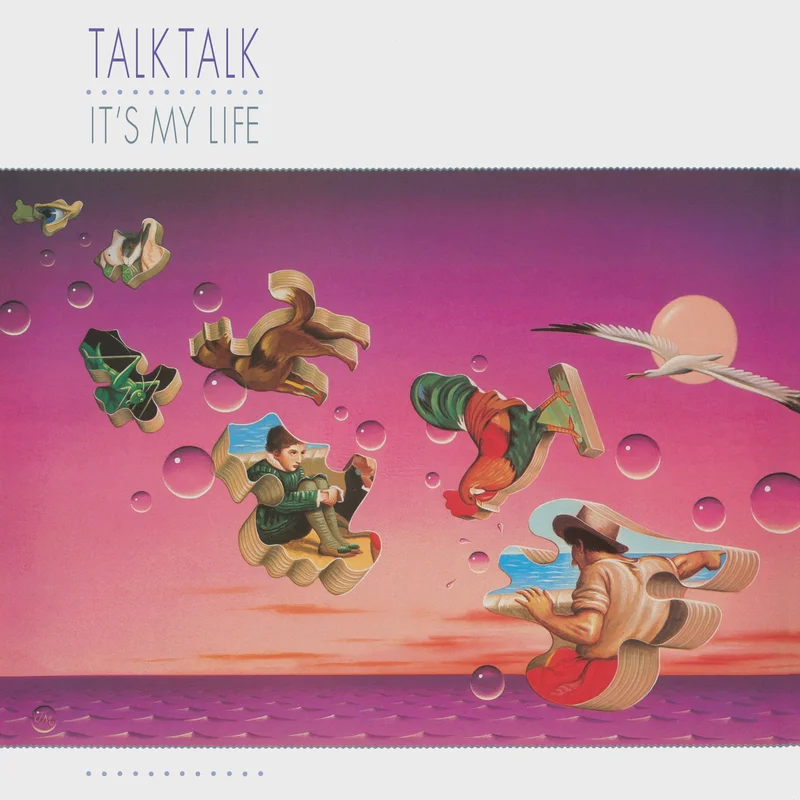
40th Anniversary Half-Speed Master with obi
Remastered at Metropolis Studios
Remastered by Matt Colton
Talk Talk is a band whose reputation has grown exponentially over the past 30 years thanks in part to the genre-busting album Spirit Of Eden and the tragic death of main-man Mark Hollis in 2019.
Formed in 1981 as a synth-pop quartet in the style of Duran Duran, their first two albums (including Its My Life) definitely fell into that kettle of fish. But by the time they got around to 1988s Spirit Of Eden, they had abandoned those synth-pop stylings for something more sonically adventurous, incorporating elements of improv, jazz, classical, ambient and dub into something eventually called post-rock.
In-between, they released The Colour Of Spring in 1986, musically straddling synth-pop with post-rock and becoming the bands most commercially successful record with hits like Lifes What You Make It, Living In Another World and Give It Up.
But this being 2024, its the 40th Anniversary of Its My Life we are here to observe. Talk Talk drummer Lee Harris and Charlie Hollis, son of Mark, have overseen a new, half-speed master version of the album, cut by Matt Cotton at Metropolis Studios. The goal was for greater depth and less compression than was fashionable in the early-CD days of 1984. And thats exactly what we get.
This new pressing sounds awesome. The music really pops and those cheesy synths now sound better than they have every right to.
Hollis himself decried the use of synths, but felt forced into using them due to financial restrictions, claiming that, If they didnt exist, Id be delighted.
Im with him on that and Id love to hear Its My Life re-recorded using real instruments. Sadly, thats not possible, but we do have this, vastly-improved version instead.
And heres hoping Harris and Hollis will be motivated to perform the same aural magic on The Colour Of Spring and Spirit Of Edenthe next anniversary isnt that far off. (via 13th Floor)
Talk Talks second LP, Its My Life, marks the first palpable shift in their musical trajectory. While ultimately a conventional pop record, again prepared under the watchful eye of the label, it nonetheless represents a conscious expansion of their sound. But its a subtle progression rather than radical departure, brought about through the introduction of more acoustic instruments, sophisticated chord sequences, and arrangements allowing greater space for each part to breathe.
Keen to distance himself from the ubiquitous electro-pop, Hollis saw synths as a necessary evil, begrudgingly tolerating their presence as a proxy for the orchestral instruments he couldnt yet afford. I hate the instrument, he protested (perhaps too much) to Oor magazine, especially when it turns into that squeaky bonk plinky fumble. Flippant or not, the claim appears particularly disingenuous when this album is laced with them. Therein lies the issue: certainly at this point, the rhetoric doesnt match the reality.
Nevertheless, with their original synth player Simon Brenner jettisoned after touring the first record, this heralded a move away from the traditional four-piece set-up, towards a selective use of instrumentation, as befit each track. As Hollis biographer, Ben Wardle, puts it in A Perfect Silence, Now that the band was whittled down to a core trio, Hollis could bring in musicians to add colour without having to deal with the politics of finding them something to do in every song.
One of the earlier compositions here, Call In The Night Boy was originally developed as a stripped-back piano arrangement, between Hollis and Phil Ramocon. It was one of the first examples of Hollis modulating keys, and Ramocons playing on the demo brings a jazzy feel, showing a clear taste of the future. If only the powers that be had the guts to put this version out. Alas, clearly it was too much, and it languished as a B-side, only to resurface on 1998s Asides Besides several years later. The definitive version included here is a different thing entirely an upbeat, amped-up rocker, complete with classic 80s drivetime guitar (or fuzzed-up synth?). Nonetheless, it retains some lovely, avant-garde piano and strange atonal tuned percussion parts that show flirtations with the jazz leanings that Hollis would rate so much. (viaClassic Pop Magazine)
Label: Parlophone
Format: Vinyl, LP, Album, Reissue, Remastered, Stereo, 40th Anniversary
Reissued: 2024 / Originally Released: 1983
Genre: Rock, Pop
File under: Synthesiser
Reviews
There are no reviews yet.